What is IV Therapy?
Intravenous (IV) therapy administers vitamins, minerals, and fluids directly into your bloodstream. This allows for rapid absorption, quickly replenishing depleted nutrients and supporting hydration and energy levels.
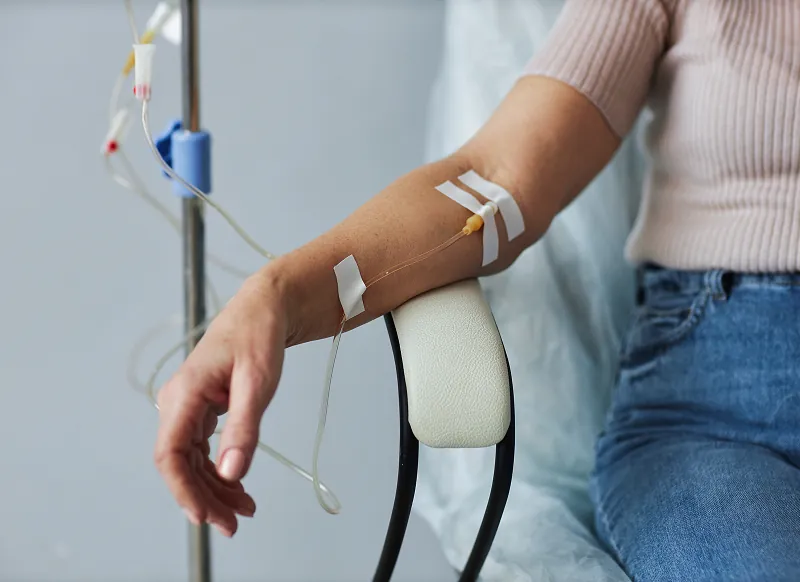
Intravenous (IV) therapy administers vitamins, minerals, and fluids directly into your bloodstream. This allows for rapid absorption, quickly replenishing depleted nutrients and supporting hydration and energy levels.
Substance use often leaves the body dehydrated and nutritionally imbalanced. IV therapy provides immediate relief, helping you feel stronger and more energized during detox. It’s a powerful way to restore balance and support overall health.
IV therapy rehydrates your body, replenishes essential nutrients, and boosts immunity. This reduces fatigue, supports organ function, and helps your body flush out toxins more efficiently, easing withdrawal symptoms and promoting faster recovery.

Still not sure?
Curious what a day in detox looks like?
Checking into detox is a big step in the right direction. We don’t expect you to make this decision lightly. We want you to know what every step of your day looks like.
IV therapy at RECO Island in Boynton Beach is built around the clinical realities of withdrawal. Standard protocols include the classic Banana Bag (thiamine, folate, magnesium, multivitamin in normal saline) for alcohol detox patients, isotonic rehydration with electrolyte correction for opioid and stimulant detox, NAD+ slow infusions for selected patients with severe post-acute symptoms, and glutathione push for hepatic and oxidative stress recovery. Every IV order is written by the medical director or attending physician based on admission bloodwork, vital signs, and the substance(s) the patient is detoxing from — not a standing menu.
Thiamine (vitamin B1) is depleted by chronic alcohol use through multiple mechanisms — poor diet, gut malabsorption, impaired hepatic conversion. Severe deficiency can precipitate Wernicke encephalopathy, a medical emergency presenting with confusion, ataxia, and ophthalmoplegia. Oral thiamine is unreliable in this state because the gut is inflamed and absorption is poor; parenteral thiamine reaches therapeutic concentrations within minutes. RECO Island administers IV or IM thiamine on the day of admission for every alcohol-detoxing patient and continues it across the active withdrawal window. It is one of the most evidence-supported, lifesaving interventions in medical detox.
NAD+ (nicotinamide adenine dinucleotide) is a coenzyme central to mitochondrial energy production and DNA repair. Long-term substance use depletes NAD+ stores, contributing to the fatigue, cognitive dullness, and emotional flatness that often dominate the first weeks of sobriety. Slow IV NAD+ infusions over multiple sessions help restore cellular energy capacity. At RECO Island we use NAD+ selectively — primarily for patients with prolonged post-acute withdrawal symptoms or stimulant use disorder histories where the recovery curve has plateaued. It is administered slowly under nursing supervision because rapid infusion causes uncomfortable chest tightness.
Yes, when delivered in a medically supervised detox setting like RECO Island. In fact, IV therapy is often safer than oral repletion during active withdrawal because the gut is inflamed, vomiting is common, and oral absorption is unreliable. Every infusion is ordered by a physician, prepared by licensed nursing staff, and run with continuous monitoring of vitals and IV-site integrity. Electrolytes are checked before potassium- or magnesium-containing infusions to prevent overcorrection. Patients on QT-prolonging detox medications get an EKG before infusions that could compound the risk.
Rehydration and electrolyte correction effects are felt within the first infusion — less nausea, fewer muscle cramps, more stable vitals, easier sleep that night. Thiamine and B-vitamin repletion shows up as clearer thinking and more energy over 24 to 72 hours. NAD+ benefits build over a series of 4 to 6 sessions, with most patients reporting noticeable improvement in mental clarity and mood by session 3. Glutathione effects are subtler but real, particularly for patients with elevated liver enzymes. The medical team tracks symptom scores daily so the IV plan adjusts to what is actually working for each patient.
Standard hydration, electrolyte, and vitamin infusions ordered as part of medically supervised detox are covered by all major commercial insurance plans (Aetna, BlueCross BlueShield, Cigna, United, Optum, Magellan, Humana) and most managed Medicaid plans, billed under the detox per-diem. NAD+ and elective wellness-style infusions outside the medical-necessity envelope are often non-covered and quoted as out-of-pocket before they are scheduled. Our admissions team verifies coverage in advance and our medical team only orders specialty infusions when there is a clinical reason — the goal is therapy that earns its place in the chart, not a menu of upsells.